Football conversations used to be much simpler.
Fans argued about goals, trophies, and who looked better on the pitch. Most opinions came from watching matches and trusting instinct.
That still exists, but statistics now shape football discussions far more than before.
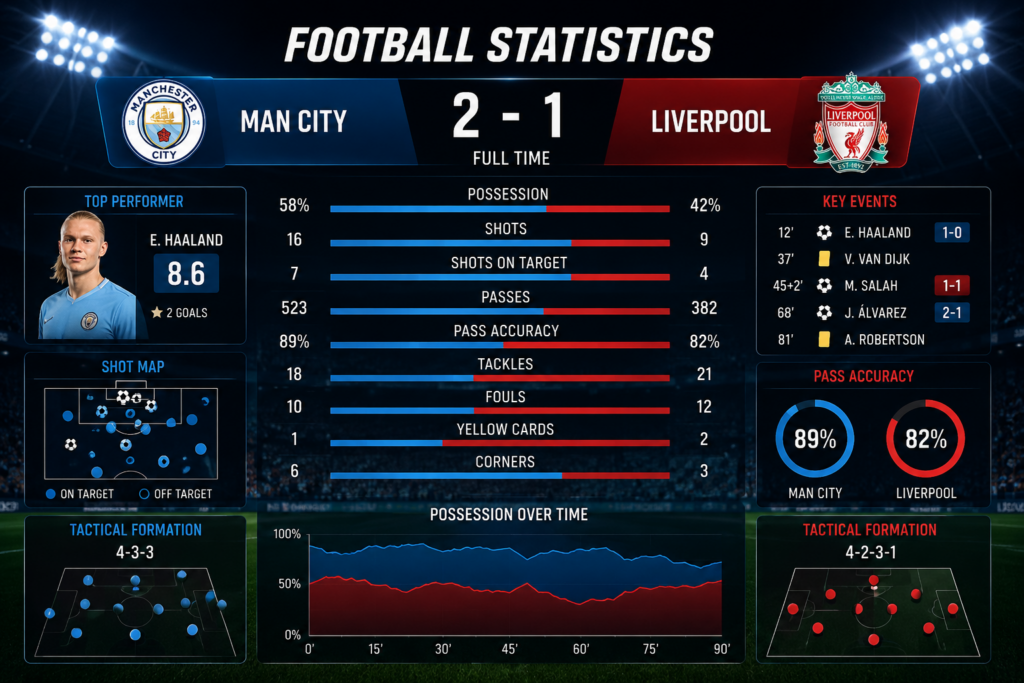
Expected goals, pressing numbers, pass progression, shot quality, defensive recoveries, and possession efficiency became part of everyday debate among supporters, analysts, and even casual viewers.
The game itself did not change overnight.
The way people understand it did.
Stats Moved Beyond Coaches and Analysts
There was a time when detailed football statistics stayed mostly inside clubs.
Analysts and coaching staffs used advanced numbers privately, while fans focused on traditional stats like goals and assists.
That barrier disappeared.
Today, performance data is available almost instantly after matches finish. Fans regularly discuss xG totals, passing networks, and defensive metrics online as naturally as they once discussed league tables.
Football analysis became much more data-driven.
Expected Goals Changed the Conversation
One statistic especially changed modern football debate.
Expected goals, or xG, gave fans a way to measure chance quality instead of relying only on final scores.
A team winning 1-0 might still look poor if it created very little attacking danger. Another side losing the match could still receive praise for dominating the underlying numbers.
That changed how performances are interpreted.
Supporters now look beyond the scoreboard because the data often tells a deeper story.
Fans Became More Analytical
Modern football audiences consume far more information than before.
People no longer watch a match and move on. They check heat maps, possession charts, defensive actions, and player movement data afterward.
Social media accelerated this trend because statistics spread quickly online during and after games.
A controversial result now creates debates built around numbers as much as emotion.
And honestly, that made football discussions more detailed, even if arguments became louder too.
Football Media Adapted Quickly
Media coverage changed alongside the audience.
Broadcasters now regularly include advanced metrics during live matches and post-game analysis. Podcasts, YouTube channels, and fan platforms discuss tactical structure and performance data constantly.
Ten years ago, conversations about pressing intensity or progressive carries felt niche.
Now they feel normal.
That shift shows how deeply analytics entered mainstream football culture.
Statistics Influence Transfer Discussions Too
Football stats are not limited to match analysis anymore.
Fans also use data heavily when discussing transfers and recruitment. Goals and assists still matter, but conversations now include pressing efficiency, passing progression, duel success, and defensive contribution.
Players are evaluated through much broader statistical profiles than before.
This changed how supporters judge signings, especially in leagues where fans closely follow analytical trends.
Digital Tools Helped Spread Football Data
The rise of football-related digital tools made statistics far more accessible.
Apps, mobile platforms, and live match trackers now deliver detailed performance information directly to users within seconds. Fans no longer need specialist websites to access advanced numbers.
That convenience helped analytics become part of everyday football culture.
Many supporters now follow matches while simultaneously checking live stats, tactical updates, and betting movement on mobile platforms, and download MelBet (Arabic: تنزيل ميل بيت) reflects how digital football tools increasingly combine real-time information with mobile accessibility.
Everything now happens instantly.
Data Still Creates Debate
Interestingly, statistics did not eliminate football arguments.
They just changed them.
People now debate which numbers matter most, how certain metrics should be interpreted, and whether analytics sometimes overcomplicate the sport.
That tension between traditional football instinct and modern statistical analysis became part of the culture itself.
Some fans trust the eye test more. Others rely heavily on data.
Most discussions now combine both.
Players Are Judged Differently
Statistics also changed how players are viewed publicly.
Certain footballers who once received little attention now gain recognition because data highlights their off-ball movement, pressing work, or defensive contribution.
At the same time, some players with impressive highlight moments receive more criticism when underlying numbers expose inconsistency.
Analytics added another layer to player evaluation.
Football Remains Emotional Anyway
Despite the rise of statistics, football is still emotional at its core.
Fans still react emotionally to goals, rivalries, big moments, and unexpected results. No data model fully captures what it feels like to watch a dramatic late winner or a devastating collapse.
That unpredictability is part of why football remains so compelling.
Statistics help explain the game, but they do not replace the experience of watching it unfold.
Final Thoughts
Statistics became a central part of football discussions because fans now have easier access to deeper information than ever before.
Performance data changed how matches, players, and tactics are analyzed across every level of the sport.
The modern football conversation blends emotion, observation, and analytics together in ways that barely existed a decade ago.
And judging by how quickly digital football culture keeps evolving, statistics will only become more influential in the years ahead.
