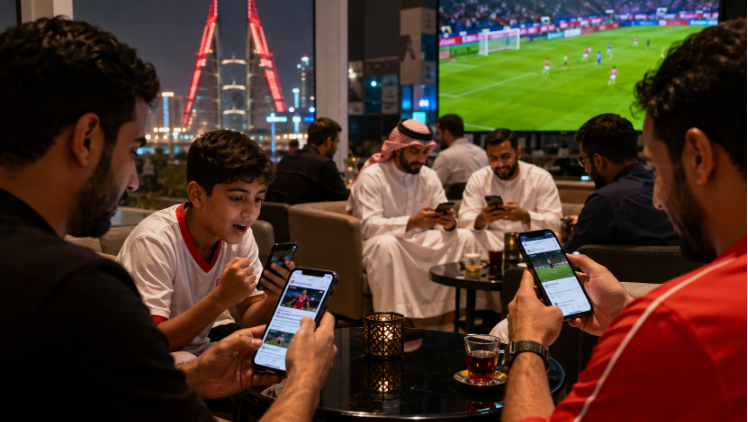
Newspapers, radio, and scheduled television programs once played the main role in spreading football news. Today, even rumors about a change of match venue can quickly reach millions of people. A goal, injury, dispute, or club statement can cross international borders before the match is even over. Fans no longer have to wait for extensive news coverage to learn what happened. Many people now get their updates through live coverage, social media, group chats, and mobile notifications. At this pace, audiences have begun to experience the sport in a very different way.
Mobile Phones Put Football Within Everyone’s Reach
Many fans spend much of their day in front of internet-connected screens. On their way to and from work, Bahraini supporters may check match results, while in the evening they might watch highlights from European leagues. As more football consumption has shifted to smartphones, looking for convenient ways to access scores and news has become routine. Those who prefer following the sport on their phones can (Arabic: تحميل تطبيق melbet) to access sports information more conveniently and keep up with what matters while on the move. Messaging, entertainment, and mobile tools have therefore become part of the everyday way audiences follow football news.
Mobile phones also make it easier for people to interact with news reports. In real time, fans can watch a striker score, comment on the goal, rate the performance, and discuss what happened. Instead of publishing only full-length articles, media outlets increasingly provide brief updates. Small pieces of information can quickly become major news for mobile users, who often consume updates in short bursts throughout the day.
Social Platforms Turn Every Fan Into a Distributor
Football news consumption now follows a particular pattern. While watching a match, viewers may move between several types of content, including team news, ticket information, live-streaming options, and services connected with sports platforms. Some users may even look for information about (Arabic: التسجيل في ميل بيت) while also following matches and results. Beyond traditional sports media, the wider online ecosystem has become increasingly intertwined with football news.
Publishers now include both clubs and players themselves. Teams may use their own accounts to announce new signings before television programs have had a chance to cover them. Even without a journalist acting as an intermediary, a player can respond directly to a rumor. This direct access effectively removes the traditional middleman from the news chain.
| Football News Cycle in the Past | Football News Cycle Today |
| Fans waited for scheduled broadcasts | Updates appear throughout the day |
| Newspapers shaped the next morning’s discussion | Social platforms shape the conversation within minutes |
| Clubs relied heavily on journalists | Clubs publish statements directly |
| Fans mostly consumed reports | Fans also repost, comment, and create clips |
| Rumors traveled through limited channels | Rumors can cross borders within moments |
Live Matches Create a Constant Stream of News
Starting lineups generate interest before kickoff. A disappointing performance can become the defining feature of the first half. Before the final whistle, red cards may create dramatic scenes and spark arguments about refereeing decisions. Then come player ratings, suspensions, injuries, and interviews.
Fans can choose how much detail they want to follow. Not everyone is interested only in the final score. Some care about statistics, comments from former players, transfer implications, or tactical analysis.
Short-Form Video Has Changed the Pace
Because short videos are easy to watch and share, controversial tackles, unusual celebrations, and goalkeeper mistakes can spread extremely quickly.
Video is also a largely universal medium. Images allow Bahraini fans to experience the excitement of a last-minute goal even if they were not watching the match live. Captions and accompanying commentary can provide additional context and make important moments easier to understand.
Algorithms Amplify Popular Stories
Football posts on social media rarely appear in simple chronological order. Platforms learn from actions such as watching, liking, saving, and sharing content. Users who regularly interact with accounts related to the Premier League, Champions League, or Gulf leagues are therefore likely to see more relevant football content.
Once transfer rumors or refereeing decisions gain momentum, they can reach much wider audiences. Common outcomes include:
- Breaking news reaching interested fans before they actively search for it.
- Popular clips repeatedly resurfacing through different accounts.
- International stories becoming local talking points within minutes.
- Old footage returning to circulation when a new event makes it relevant again.
The rapid circulation of information also increases the risk of inaccurate claims spreading widely. Fabricated quotes can travel just as quickly as genuine ones. Fans therefore need to identify who actually made a statement and check whether official channels or reputable media outlets support the claim.
Transfer News Is Built for Rapid Sharing
The uncertainty surrounding transfer rumors makes them especially easy to circulate. Fans primarily want to know which players might join or leave a team, the potential budget involved, and how a transfer could affect the starting lineup. When there is no clear consensus, every new update can trigger another round of debate.
Transfer windows intensify this process. Agents consult different parties, journalists compete to publish developments first, and fans monitor clues such as absences from training, social media activity, and comments made to the press. None of these signals necessarily tells the whole story, but each additional detail can contribute to the developing narrative.
Rumors Travel Faster Than Corrections
With sensational rumors, attention often comes before careful analysis. Corrections may take longer to emerge and can reach fewer people than the original claim. As a result, false allegations sometimes continue to resurface even after they have been challenged.
Accurate reporting is therefore essential. The best journalists distinguish between confirmed facts, speculation, negotiation tactics, and recycled stories. In most cases, following reliable outlets provides a clearer picture than reacting to every message or post that suddenly goes viral.
Betting Adds More Urgency to Match News
Real-time updates can become significantly more important for people following football betting markets. Injuries, suspensions, last-minute lineup changes, and team news may affect assessments of a match and its probabilities. Information confirmed thirty minutes before kickoff may therefore be more relevant to bettors than a detailed analytical report published the previous day.
For major regional and European football competitions, Bahraini audiences increasingly expect match information almost immediately. Those interested in betting-related analysis may pay particular attention to:
- Confirmed lineups and late player withdrawals.
- Current team form and home or away performance.
- Suspensions, injuries, and likely replacements.
- Match schedules, venue changes, and official competition updates.
Fast information is not automatically useful information. Bettors can make poor decisions when they treat rumors as established facts. The value lies in verified information and appropriate timing rather than the sheer volume of posts.
Newsrooms Now Compete With the Crowd
Newspapers, radio stations, and scheduled television programs were once the primary sources of football news. Today, information about almost any development can spread to millions of people. A goal, injury, dispute, or club statement can cross international borders before the match has ended.
Audiences no longer necessarily wait for lengthy reports from established broadcasters or publications. Many people receive their news through live coverage, social media, group chats, and mobile notifications. As events unfold at this speed, what football fans see and discuss can change while the match itself is still in progress.
Global Football Becomes a Local Conversation
A major event in England, Spain, Italy, or Germany can trigger an immediate debate in Bahrain. Across both public and private online networks, supporters may discuss the same incident in Arabic or English. Regardless of where they are, fans can receive alerts and watch the most important moments almost immediately.
Local perspectives also shape how international stories are understood. Commentators may analyze a transfer, discuss a player from the Gulf region, or compare developments at a European club with circumstances in domestic football. International news often becomes more relevant when audiences can connect it to their own local football culture.
What Should Fans Trust When the News Cycle Accelerates?
Reader judgment becomes essential when news moves quickly. Official club announcements, league statements, and direct player comments generally carry more weight than anonymous screenshots or repeatedly reposted claims. Timing matters as well: negotiations can develop rapidly, meaning that a report published in the morning may already be outdated by the afternoon.
To avoid confusion, information should be checked before it is shared. As football coverage becomes faster, these basic verification habits become increasingly important. A useful way to assess whether a story is credible is to examine its original source, see whether another reputable source independently supports it, and pay close attention to how confidently the claim is worded.
The New Speed of the Game
Advances in media technology have made football news move faster than ever. Live matches generate a constant supply of notable moments, fans can follow them from their phones, clubs and players can communicate in real time, and social platforms encourage immediate sharing. Transfer rumors, betting interest, short-form video, and global fan networks have all increased demand for instant updates.
Accuracy, however, becomes even more important as the pace accelerates. A message can spread widely before fans have had time to determine whether it is reliable. The online football world may move at extraordinary speed, but credibility still takes time to build.
