
Value betting, or value bets, is a concept that allows bettors (those who place bets) to find bets with favourable odds, that is, odds which, in the bettor’s opinion, are overestimated by the bookmakers. Such bets can be profitable in the long term if one correctly assesses the probabilities of outcomes and compares them with the odds offered by the bookmakers. Let’s explore what value betting in football is, how to apply it, and how to learn to calculate the right bets.
Thank you for reading this post, don't forget to subscribe!Basics of Value Betting
Before delving into the details, it is important to understand what value betting is. It is a bet that, in the bettor’s opinion, has a higher probability of winning than that suggested by the bookmaker. To identify such a bet, you need to compare your own probability calculations with the bookmakers’ odds.
Every outcome of a football match has its own probability, which is expressed through the odds offered by the bookmaker. For example, the odds for the outcome “team A wins” might be offered at 2.00. This means that, according to the bookmaker, the probability of this team winning is 50%. However, if the bettor assesses the probability of team A winning at 60%, they consider the odds of 2.00 to be undervalued. This would be a value bet – a bet with positive expected value. Just as in an online casino in Hungary, players can use strategies to increase their chances of winning, so in sports betting, it is important to apply methods that allow for accurate assessment of the real probabilities of outcomes.
How to Calculate Outcome Probabilities
To apply value betting, it is necessary to be able to correctly assess the probability of match outcomes. For this, it is important to consider a multitude of factors, such as team statistics, player form, injuries, tactical features, and even the weather. All these data can influence the final outcome of the match, and the ability to analyse these factors will help you more accurately assess the probability of events.
For example, let’s take a match between two football teams. Based on statistics and analysis, you can calculate that the probability of team A winning is 60%, a draw is 25%, and team B winning is 15%. These percentages can be converted into odds using the following formula:
Odds = 100 / probability
Thus, the probability of team A winning (60%) corresponds to odds of 1.67 (100/60). Similarly, the probability of a draw (25%) corresponds to odds of 4.00, and team B winning (15%) corresponds to odds of 6.67.
Comparison with Bookmakers’ Odds
Now that you have your own probabilities and odds, it is important to compare them with the odds offered by bookmakers. If the odds offered by the bookmaker are higher than your calculated odds, this may be a signal that the bet is a value bet.
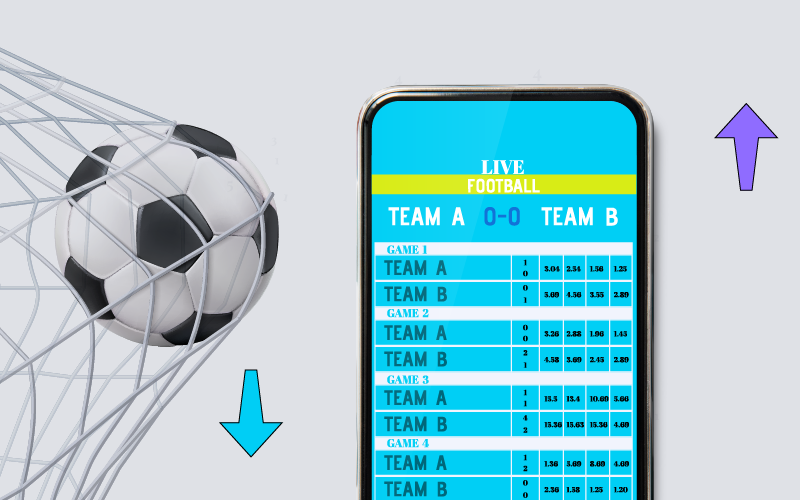
Suppose the bookmaker offers the following odds for the same match: Team A to win – 2.00, draw – 3.50, Team B to win – 5.00. At first glance, the odds for Team A to win and for a draw may seem inflated, as your calculations show that Team A’s win should have odds of 1.67, and a draw – 4.00. In this case, a bet on Team A to win at odds of 2.00 would represent a value bet, as the odds are higher than your calculated ones. Thus, you can place a bet, counting on the bookmaker underestimating Team A’s chances. To always be aware of the best bets, you can pay attention to top online betting sites in Hungary, which offer favourable odds and a variety of events for betting.
Example of Calculating a Value Bet
For a more illustrative example, let’s consider a real case. Imagine we are analysing a match between two strong teams, where, in your opinion, the chances of one of them winning are 55%. We calculate the odds for this team to win:
Odds = 100 / 55 = 1.818
However, the bookmaker offers odds of 2.10 for this team to win. This means the bookmaker assesses the probability of the team winning at 47.6%, rather than 55%. Therefore, a bet on this team to win at odds of 2.10 is valuable, as the odds are higher than the estimated probability.
Why is value betting important in football?

Football is one of the most popular disciplines for betting, and correctly assessing probabilities can significantly increase the chances of success. Unlike other sports, where the outcome probability can be more predictable (for example, in tennis or basketball), football often contains an element of uncertainty, which makes betting riskier. However, the ability to find value bets and confidently place bets on such outcomes helps avoid random bets and reduce risks in the long term.
How to Avoid Mistakes When Applying Value Betting
Although value betting seems like a fairly simple concept, there are several pitfalls that can await the bettor. One of them is the subjectivity in assessing probabilities. Sometimes players may overestimate a team’s chances, guided by emotional attachment or biased opinion. To avoid such mistakes, it is important to rely on objective data and statistics.
It is also worth considering that value betting requires time and effort. It is not a strategy that will yield instant results. For the successful application of this concept, it is necessary to learn to analyse data, make accurate calculations, and make decisions based on this.
Knowledge is power
Value betting in football is a powerful tool for those who wish to earn from betting in the long term. By using the correct method of assessing probabilities and comparing odds, one can find undervalued bets and make informed predictions. The key is to avoid emotional decisions and rely on facts and data. Practice and patience will help you become a successful bettor, and value betting is an excellent strategy for achieving success in the world of betting.
